
Youth Soccer Guide
Youth Soccer Gear Checklist: Cleats, Shin Guards & Ball Sizes by Age
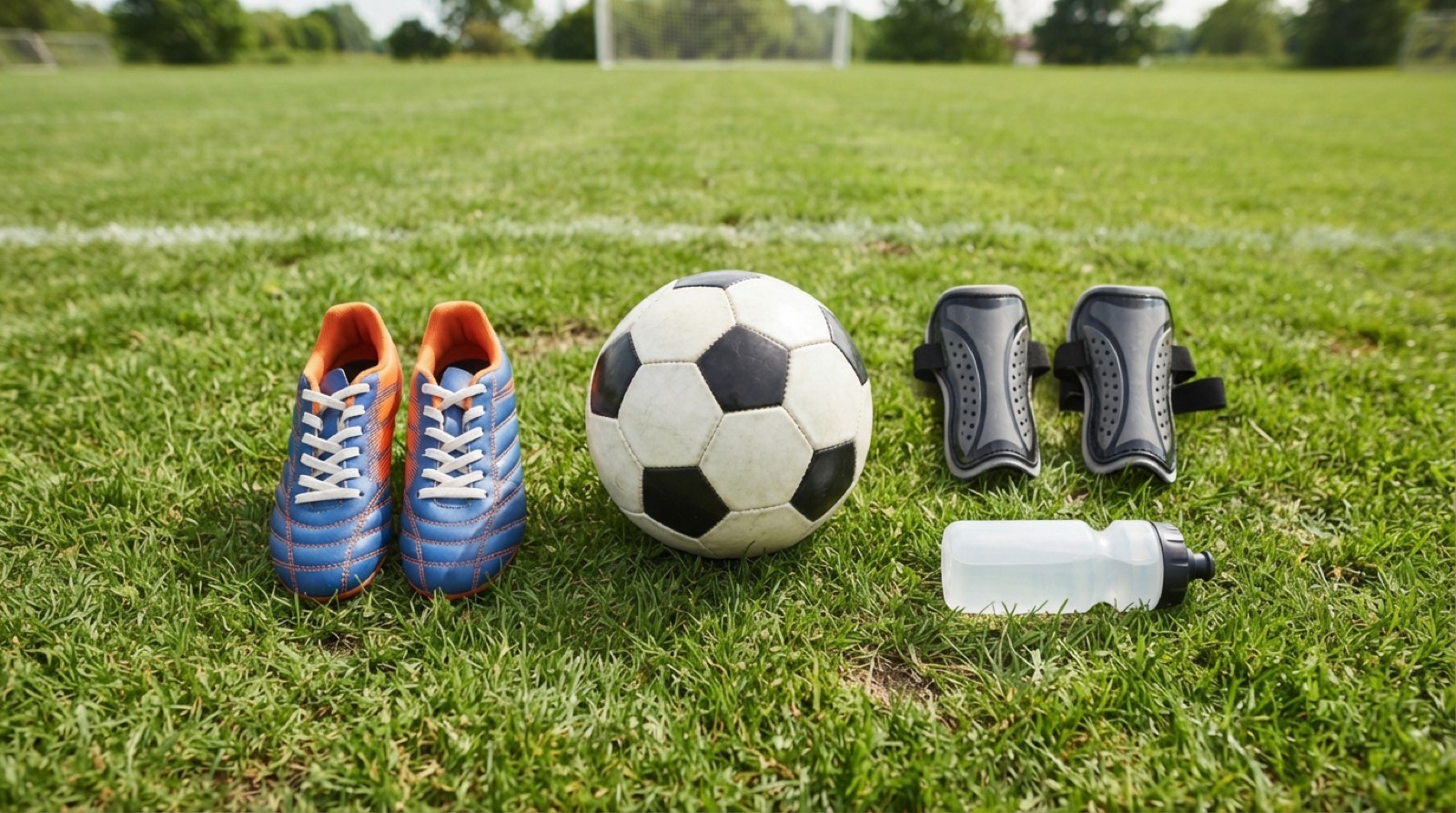
Every season, I see a parent walk up with a giant bag of new soccer gear and a worried face. They have bought things their child does not need and missed what they do.
So let me make this simple. Youth soccer gear for kids should protect them, help them move, and make practice easier. It should not turn the first week into a shopping project.
Key takeaways
- The must-haves are shin guards, soccer socks, water, athletic clothes, and safe footwear.
- Ball size matters: U.S. Soccer uses size 3, size 4, and size 5 by age group.
- Cleats should be soccer cleats, not baseball or football cleats.
- Buy basic gear first; upgrade only after your child is playing regularly.
- For Temecula heat, a good water bottle belongs on the checklist every time.
Youth soccer gear for kids: the quick checklist
For a first practice or evaluation, your child needs shin guards, long soccer socks, water, comfortable athletic clothes, and safe shoes. Cleats are helpful on grass but not worth overbuying before your child starts. Add a correctly sized ball for home practice, then wait before buying extras.
If you are getting ready for a first session at SWSC, bring the basics and let the coach evaluate the player, not the equipment. A free evaluation is about fit, confidence, and level.
The only gear your child truly needs
The minimum soccer kit is smaller than most parents think. In my coaching life, I would rather see a child in simple gear that fits than expensive gear that distracts them. You need enough protection, traction, and water to practice safely.
| Item | Required? | What to check |
|---|---|---|
| Shin guards | Yes | Covers shin, stays under socks |
| Soccer socks | Yes | Long enough to cover guards |
| Water bottle | Yes | Easy to open, enough for breaks |
| Cleats | Usually | Soccer-specific, snug, no pain |
| Ball | Helpful | Correct size for age |
| Bag | Optional | Keeps gear together |
| Slides or sandals | Optional | Useful after practice |
The U.S. Soccer Player Development Initiatives require shin guards in their small-sided standards, and that is a rule I never want parents to treat casually. Kicks to the shin are part of learning the game.
Soccer ball sizes by age
The right ball helps a child learn cleaner touches. A ball that is too big changes how they kick, trap, and dribble. U.S. Soccer’s small-sided standards list size 3 for U6-U8, size 4 for U9-U12, and full-size size 5 play at U13 and older.
| Age group | Typical age | Ball size | Format |
|---|---|---|---|
| U6-U8 | 6-8 and younger | Size 3 | 4v4, no goalkeeper |
| U9-U10 | 9-10 and younger | Size 4 | 7v7 with goalkeeper |
| U11-U12 | 11-12 and younger | Size 4 | 9v9 with goalkeeper |
| U13 and up | 13+ | Size 5 | 11v11 |
Source: U.S. Soccer Player Development Initiatives, small-sided game standards.
If your child is between sizes because they are playing up or down, ask the coach. For the full breakdown, see our guide to soccer ball sizes by age; for now, this table is enough for almost every family.
Cleats: what matters and what does not
Good youth cleats should fit securely, grip grass, and let the child run without thinking about their feet. They do not need to be expensive. They do need to be soccer cleats, because baseball and football cleats can have toe studs that are not appropriate for soccer.
Use this fit check:
- The heel does not slide.
- The toes have a little room but do not swim.
- The child can jog, stop, and cut without pain.
- The laces or closure stay tight.
- The cleat matches the surface: firm-ground for most natural grass fields.
Do not buy cleats too big “so they grow into them.” A loose cleat can cause blisters and makes quick turns harder. If budget matters, basic models are fine. The ball does not know the logo.
Shin guards and socks
Shin guards should protect the front of the shin and stay put while the player moves. If they slide every drill, the child will spend practice fixing gear instead of playing. Younger kids often do best with simple guards that include ankle protection; older players may prefer slip-in guards with sleeves.
Soccer socks go over the shin guards. They should be long enough to cover the guard fully. At home, have your child put on shin guards, socks, and cleats before the first practice. It saves the sideline scramble and teaches them to manage their own equipment.
One practical note: write your child’s name on both guards. Gear gets mixed up fast when many kids change after practice.
Water and heat gear for Temecula practices
In Temecula, Murrieta, Menifee, and Lake Elsinore, water is not an accessory. It is part of the kit. The CDC Heat Health guidance recommends carrying a water bottle, drinking and refilling it through the day, checking urine color, and watching for symptoms like heavy sweating, dizziness, headache, weakness, and nausea.
For most sessions, pack:
- A reusable water bottle your child can open alone.
- Light practice clothes.
- Sunscreen applied before arrival.
- A small towel for hot days.
- A simple snack for after practice if the drive home is long.
I cover summer practice safety in Keeping Kids Safe in the Heat. Gear does not prevent heat problems by itself, but it helps when parents build good habits early.
What not to buy yet
Parents waste the most money before they know how much their child will play. Skip the extras until your child has a routine, a team placement, and a coach has told you what is actually useful for their current level.
You can wait on:
- Expensive training balls.
- Rebounders.
- Agility ladders.
- Weighted balls.
- Grip socks.
- Multiple pairs of cleats.
- Team-colored accessories before placement.
For beginners, the best home training tool is still a correctly sized ball and a little space. A little dribbling in the yard beats a garage full of gear no one uses.
How gear changes as players get older
As players move from beginner soccer into more serious training, gear becomes more about consistency than quantity. A competitive player may need backup socks, rain layers, recovery sandals, and a better bag. A goalkeeper may need gloves. A player training several days a week may wear cleats out faster and need a backup pair.
The bigger change is not the gear; it is the schedule. The American Academy of Pediatrics says an estimated 50% of sports-related injuries in kids come from overuse. So if your child starts adding sessions, pay attention to rest, soreness, and shoe wear. Gear supports training, but it does not replace recovery.
If your child is deciding whether to move up, read Rec vs. Competitive Youth Soccer before spending like a competitive family.
First-practice packing list
The night before practice, pack the bag with your child. It teaches responsibility, keeps the car ride calmer, and helps young players learn that preparation is part of being on a team each week at practice. I like this simple list:
| Pack this | Why it matters |
|---|---|
| Shin guards and socks | Required for safe play |
| Cleats or athletic shoes | Helps traction and movement |
| Water bottle | Hydration during breaks |
| Ball | Useful for warm-up and home touches |
| Light snack | Helps after practice |
| Extra shirt | Helpful on hot days |
New to the sport? Pair this checklist with What Age Should Kids Start Soccer? and Youth Soccer in Temecula. If your child wants extra touches beyond team practice, our training programs can help once the basics are in place.
Buying gear locally without stress
Temecula Valley parents do not need a perfect bag on day one. Start with safe, simple gear, then adjust after you know your child’s age group, field surface, and level. Families from Murrieta, Menifee, Wildomar, and Lake Elsinore can follow the same rule: buy the basics, ask the coach, then upgrade slowly.
When your child is ready to try soccer, bring what you have and come play. The gear can be fixed. The first goal is much simpler: help your child feel comfortable enough to touch the ball again tomorrow.
Frequently asked questions
What gear does my child need for youth soccer?
Your child needs shin guards, soccer socks, water, athletic clothes, and either cleats or safe athletic shoes. A properly sized ball helps at home. Do not buy expensive extras for the first session. Fit, comfort, and safety matter more than brand.
What size soccer ball does my child need?
Most young players use size 3 through U8, size 4 from U9 through U12, and size 5 at U13 and older. Those standards come from U.S. Soccer's small-sided game guidelines. When in doubt, ask the coach or league before buying.
Do kids need soccer cleats for the first practice?
Cleats help on grass, but many beginners can start in safe athletic shoes for an evaluation or first session. Avoid baseball or football cleats with a front toe stud. Once your child commits to playing, buy soccer cleats that fit snugly without pinching.
How should shin guards fit a child?
Shin guards should cover the front of the shin without blocking the knee or ankle. They should stay in place under soccer socks while the child runs and kicks. If your child keeps adjusting them, they are probably too small, too large, or not secured well.
Should I buy expensive youth soccer gear?
No, not at the start. Most kids need basic, well-fitting gear, not premium equipment. Spend first on comfortable cleats, safe shin guards, and a reusable water bottle. Upgrade only when your child plays often enough to wear out the basics.